← Home · Slopes & Walls

Active and Passive Anchor Design in Bangor

Together, we solve the challenges of tomorrow.

READ MORE →

The coastal geology of Bangor demands anchor systems that can handle more than just tension. With the Menai Strait shaping the microclimate, moisture and salt-laden winds accelerate corrosion in buried steel components. Our team has worked extensively across the city's distinctive terrain, where glacial till overlies Cambrian and Ordovician mudstones near the university and the A5 corridor. Designing an anchor here means double-checking the bond length in weathered slate and addressing the variable groundwater perched above the bedrock. A poorly specified anchor in these conditions will creep, and that leads to wall movement. We combine site investigation data with local experience to specify the right active or passive anchor for each Bangor project, whether it's a basement retention system off Holyhead Road or a slope stability solution near Penrhyn Castle.

An anchor in Bangor's glacial till must be designed for bond failure at the grout-ground interface, not just the steel tendon capacity.

Method and coverage

In Bangor, the biggest variable we see is the depth to competent rock. Drill 3 metres and you hit sound schist; move 50 metres and the bedrock drops below 8 metres of soft boulder clay. This forces us to design anchors that work in mixed ground profiles. An active anchor applies load immediately to pre-compress the ground and limit deflections. A passive anchor only engages when the structure moves. For temporary excavations near sensitive structures, such as the listed buildings around Upper Bangor, active anchors give better control. For permanent works, we often specify double-corrosion-protected (DCP) anchors per BS 8081, with factory-made sheathing tested at 1.5 times the working load. A typical design cycle for us includes a pull-out test on a sacrificial anchor to validate the ultimate bond stress before production drilling. When the soil profile is too erratic for anchors alone, we integrate the design with retaining wall systems to create a combined restraint strategy. Every anchor we design in Bangor goes through a load-transfer analysis that accounts for the friction angle of the local glacial deposits, which typically falls between 32 and 36 degrees.
Active and Passive Anchor Design in Bangor
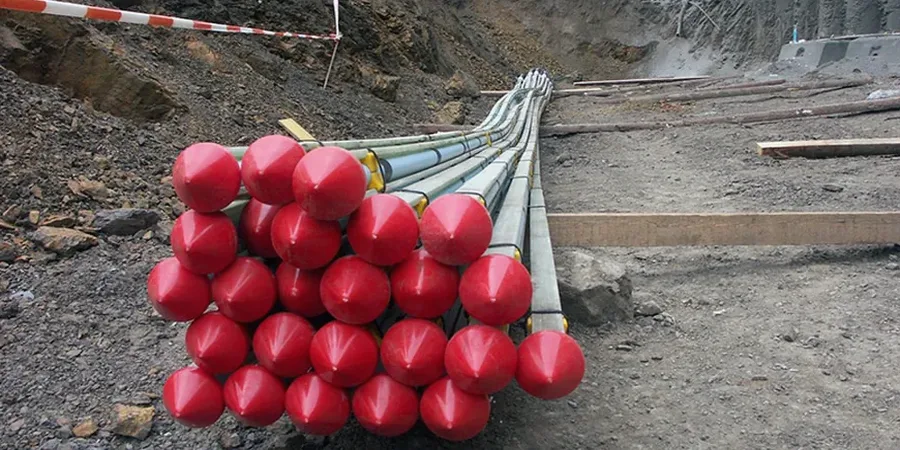
Technical reference image — Bangor

Regional considerations

We investigated a retaining wall failure on a Bangor site where the contractor had used passive bar anchors without a site-specific pull-out test. The design assumed a bond stress of 300 kPa based on a desk study. When we exhumed two anchors, the actual bond in weathered mudstone was barely 90 kPa. The wall had rotated 45 mm before the anchors engaged. The remedial design involved installing 12-metre active strand anchors at a 20-degree inclination, post-tensioned to 180 kN each. The client lost six weeks and paid double the original anchor cost. In Bangor's variable geology, skipping a sacrificial test anchor is the most expensive decision you can make. The other common risk is corrosion. We have seen unprotected bar anchors lose 15% of their cross-section in less than eight years when installed in fill containing clinker and ash near the old railway sidings. For any permanent anchor within 500 metres of the Strait, we mandate DCP systems with corrugated sheathing and factory-injected grease.

Need a geotechnical assessment?

Reply within 24h.

Email: contact@geotechnical-engineering.biz

Reference parameters


ParameterTypical value
Anchor typeActive (prestressed) / Passive (non-stressed)
Design standardBS 8081:2015, BS EN 1997-1:2004 (EC7)
Tendon steelBS 5896 high-tensile strand (15.7 mm dia)
Corrosion protectionDCP Class I (permanent) or Class II (temporary)
Typical bond length (rock)3.0 m to 6.0 m in competent mudstone
Typical bond length (soil)6.0 m to 10.0 m in dense glacial till
Test load (acceptance)1.25 x working load per BS 8081
Free length minimum5.0 m or per EC7 sliding wedge analysis

Associated technical services

01

Anchor Design and Specification

We produce detailed anchor schedules and design reports for active and passive systems under BS 8081 and EC7. Each design includes a tendon profile, bond length calculation based on site-specific shear strength, and a corrosion protection specification matched to the aggressivity of the Bangor ground and groundwater. We provide construction drawings showing anchor inclination, head detail, and stressing sequence.

02

Anchor Testing and Verification

We supervise on-site anchor testing including sacrificial pull-out tests to confirm ultimate bond capacity, acceptance tests to 1.25 times the working load, and long-term monitoring with load cells for critical structures. Our testing regime follows BS EN 1537 and gives the contractor immediate pass/fail criteria so production drilling can proceed without delay.

Standards that apply


BS 8081:2015 Code of practice for grouted anchors, BS EN 1997-1:2004 Eurocode 7: Geotechnical design, BS EN 1537:2013 Execution of special geotechnical works — Ground anchors, BS 5896:2012 High tensile steel wire and strand for prestressing, CIRIA Report C760: Guidance on embedded retaining wall design

Q&A

What is the difference between an active and a passive anchor?

An active anchor is stressed during installation to apply a predefined load to the structure immediately. This pre-compresses the ground and limits movement from the start. A passive anchor is installed without prestress and only develops resistance once the structure begins to move and activates the tendon. In Bangor, we specify active anchors when deflection must be kept below 10 mm, typically near existing buildings. Passive anchors suit temporary works or less sensitive environments where some displacement is tolerable.

How much does anchor design and testing cost for a project in Bangor?

For a typical Bangor project, a complete design package with on-site pull-out testing ranges from £810 to £3,000. The final cost depends on the number of anchors, the ground conditions encountered during drilling, and whether we are designing a simple temporary system or a fully corrosion-protected permanent anchor scheme under BS 8081.

How long does a sacrificial pull-out test take on site?

A sacrificial test anchor can be drilled, grouted, and tested within 3 to 5 days, depending on the grout curing time. We usually allow 7 days from rig mobilisation to receiving the verified bond stress values. In Bangor's silty glacial till, we typically use a neat cement grout with a water-cement ratio of 0.45 and allow a minimum curing period of 72 hours before stressing.
Location and service area

We serve projects across Bangor and surrounding areas.

View larger map