Together, we solve the challenges of tomorrow.
READ MORE →In the steep-sided valleys and coastal fringes of Bangor, North Wales, the stability of natural and engineered slopes is a fundamental concern for safe construction and long-term infrastructure resilience. The category Slopes & Walls encompasses the analysis, design, and remediation measures required to manage earth pressures, prevent landslides, and retain ground where level space is at a premium. From the glacial till mantling the lower slopes of the Snowdonia foothills to the weathered Cambrian slates that underpin much of the city, Bangor's terrain demands a rigorous understanding of soil and rock mechanics. Whether you are extending a property on a hillside along Holyhead Road or safeguarding a coastal access path near the Menai Strait, a professionally executed slope stability analysis is the critical first step in quantifying risk and defining an appropriate engineering response.
Bangor's geological setting is dominated by the legacy of repeated Quaternary glaciations, which left a complex veneer of stiff, stony clays—locally known as boulder clay—overlying Lower Palaeozoic metasedimentary bedrock. This till can be highly variable in composition and drainage behaviour, often containing lenses of sand and gravel that act as perched water tables. When combined with the region's characteristically high annual rainfall, these conditions create a heightened susceptibility to shallow translational slides and rotational failures, particularly during prolonged wet periods. Equally, the underlying Bangor blue slate, while generally competent at depth, is frequently near-surface weathered and intensely jointed, posing risks of wedge failure on rock cut slopes. Understanding these local ground conditions is essential when designing both temporary works and permanent retaining structures, as poor ground characterisation remains the single most common cause of underperformance in earth retention systems.
All slope and retaining wall works in Bangor must comply with the overarching framework of UK construction standards, most critically Eurocode 7 (BS EN 1997-1 and -2: Geotechnical Design), together with its UK National Annexes. These documents establish the principles for limit state design, requiring consideration of both ultimate (ULS) and serviceability (SLS) conditions. For anchored structures, execution is governed by BS 8081:2015, which mandates specific procedures for testing and corrosion protection—a vital consideration in Bangor's marine-influenced environment where saline spray can accelerate degradation. Planning constraints in Gwynedd, particularly within the Snowdonia National Park boundary and designated conservation areas, often require sensitive engineering solutions that minimise visual intrusion. This frequently makes active/passive anchor design a preferred solution over massive gravity walls, as anchors can stabilise a slope with a far smaller construction footprint and less landscape disruption.
The types of projects in Bangor that typically demand specialist slope and wall engineering are diverse. Residential developments on the city's steeper hillsides routinely require cut-and-fill earthworks supported by retaining wall design, ranging from reinforced concrete cantilever walls to mechanically stabilised earth (MSE) systems for larger terraced platforms. Infrastructure schemes, such as the ongoing maintenance of the A5 and A55 corridors where they traverse unstable cuttings, rely heavily on rock netting, soil nailing, and drainage improvements to prevent debris falls onto carriageways. Coastal erosion protection along the Menai Strait foreshore presents a particularly challenging interface between geotechnics and hydraulics, often resolved with anchored sheet pile walls or masonry-clad bored pile walls that must withstand both tidal scour and aggressive chemical exposure. Even smaller domestic projects, like creating a level garden behind a Bangor terrace, can demand a properly engineered solution if the retained height exceeds typical permitted development thresholds.
In Bangor's glacial till and weathered slate terrain, early warning indicators include fresh tension cracks at the slope crest, bulging or leaning of retaining walls at the toe, and saturated ground with water seepage even in dry weather. Tilting fence posts, newly stuck doors in nearby buildings, and small, localized slumps on the slope face are also critical signs that a full slope stability assessment should be commissioned without delay.
Under UK permitted development rules, you generally do not need planning permission if the wall is under 1 metre high and adjacent to a highway, or under 2 metres elsewhere. However, in Bangor, if your property falls within a Conservation Area or the Snowdonia National Park boundary, additional Article 4 Directions may remove these permitted rights, requiring a formal planning application regardless of height.
High rainfall directly impacts design by reducing effective soil strength and increasing pore water pressures behind retaining walls. In Bangor, robust drainage systems are non-negotiable, typically incorporating granular backfill with geotextile filters, weep holes, and sometimes deep subsoil drains. Eurocode 7 requires these hydraulic actions to be considered as persistent design situations, meaning permanent drainage must be maintainable for the structure's entire design life.
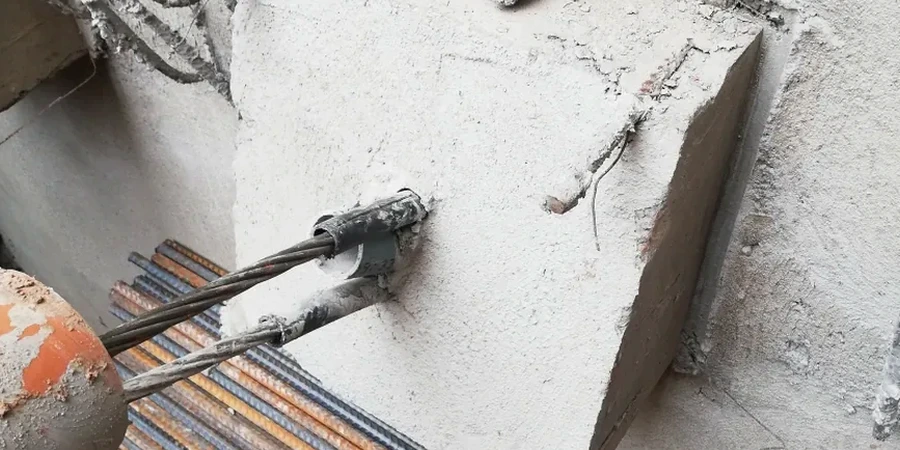
An active anchor is tensioned against the structure or slope face immediately after installation, applying a pre-determined load to actively restrain ground movement. A passive anchor is not pre-stressed; it only develops its full resisting force as the ground begins to deform. In Bangor's stiff glacial tills, active anchors are often preferred for critical structures where movement must be minimised, while passive systems like soil nails can be more cost-effective for general cut slope reinforcement.