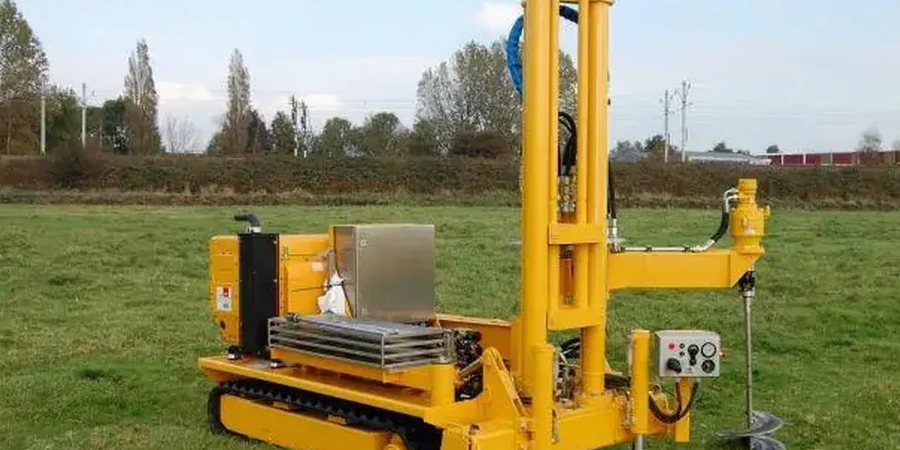
Roadway engineering in Bangor represents a critical discipline that encompasses the planning, analysis, design, construction and maintenance of road pavements and subgrade systems tailored to the region's unique environmental and geological conditions. This category covers the full spectrum of pavement solutions, from flexible bituminous surfaces that adapt to ground movement to rigid concrete slabs that distribute loads over weaker soils, as well as the essential ground investigation techniques that underpin every successful road project. In a city like Bangor, where the transport network connects residential areas, the university, healthcare facilities and the A5 corridor, the integrity of roadway infrastructure directly influences economic vitality, public safety and everyday mobility. Understanding the local ground behaviour and applying appropriate design methodologies is not merely a technical exercise but a fundamental requirement for delivering durable roads that withstand decades of traffic and climate stresses.
The geology beneath Bangor and its environs presents a varied and often challenging canvas for roadway engineers. Much of the area is underlain by glacial till deposits, comprising a heterogeneous mixture of clays, silts, sands and gravels left behind by retreating ice sheets, which can exhibit significant lateral and vertical variability over short distances. These superficial deposits overlay Ordovician and Silurian bedrock of the Snowdonia slate belt, with locally weathered zones that create abrupt transitions in bearing capacity. The presence of soft alluvial soils along the banks of the Menai Strait and the Afon Cegin introduces additional complexity, as these materials are prone to settlement and reduced strength when saturated. Groundwater levels are frequently high, particularly in low-lying areas, and the region's abundant rainfall means drainage considerations are inseparable from pavement performance. A thorough CBR study for road design becomes indispensable in this context, as the California Bearing Ratio testing provides the empirical data needed to characterise subgrade strength and predict how the ground will respond to construction traffic and long-term service loads.
Roadway projects in Bangor must comply with the overarching framework of the UK's Design Manual for Roads and Bridges (DMRB), which sets out the technical standards for trunk roads and motorways, alongside the Specification for Highway Works (SHW) and the Manual of Contract Documents for Highway Works (MCHW). For local authority roads, the guidance provided by the UK Roads Liaison Group and the Well-managed Highway Infrastructure code of practice applies, ensuring that even residential and distributor roads meet nationally recognised benchmarks. Key British Standards such as BS EN 13108 for asphalt mixtures and BS 8500 for concrete are referenced throughout pavement specifications, while Eurocode 7 governs geotechnical design aspects including bearing capacity and settlement analysis. The Welsh Government's transport strategy also influences project requirements, particularly where active travel measures, bus priority corridors or environmental mitigation are integrated into road schemes. Adherence to these standards ensures that pavement designs are not only structurally sound but also legally defensible and eligible for public funding.
The types of projects that demand professional roadway engineering input in Bangor are diverse and span both public and private sectors. Residential estate roads and access ways for new housing developments require carefully designed pavements that balance initial construction economy with long-term maintenance liability, often leaning on flexible pavement design for its adaptability to phased construction and ease of utility access. Commercial and industrial parks, where heavy goods vehicles impose concentrated loading, may justify rigid pavement design to minimise deformation and rutting over time. Highway improvement schemes along the A5, A55 and connecting routes involve lane widening, junction upgrades and resurfacing that must accommodate high traffic volumes while minimising disruption. Institutional projects such as Bangor University campus roads, hospital access routes and school drop-off zones present their own challenges with pedestrian interaction, surface water management and aesthetic considerations. Each project type demands a tailored approach to ground investigation, material selection and structural thickness design, reinforcing the importance of integrating geotechnical and pavement engineering from the earliest stages of planning.
The choice hinges on subgrade conditions, traffic loading, maintenance philosophy and construction constraints. Flexible pavements tolerate differential settlement in glacial till soils and simplify utility access, while rigid pavements offer greater durability under heavy, channelled traffic and perform well on low-strength subgrades when designed with appropriate slab reinforcement and jointing systems.
A CBR study quantifies the bearing strength of the subgrade, which directly governs pavement layer thicknesses. Given Bangor's variable glacial deposits, soft alluvial zones and high groundwater, site-specific CBR values prevent under-design leading to premature failure or over-design wasting resources, ensuring the pavement structure is both safe and cost-effective.
Trunk road designs follow the Design Manual for Roads and Bridges (DMRB), while local authority roads align with the Well-managed Highway Infrastructure code. Relevant standards include BS EN 13108 for asphalt, BS 8500 for concrete and Eurocode 7 for geotechnical design, with the Specification for Highway Works governing materials and workmanship.
Variable glacial till and high groundwater often necessitate soil improvement, deeper capping layers or drainage measures, which can increase earthworks costs and extend programmes. Early CBR investigation and geotechnical analysis allow these factors to be quantified and managed, reducing the risk of unforeseen overruns during construction.