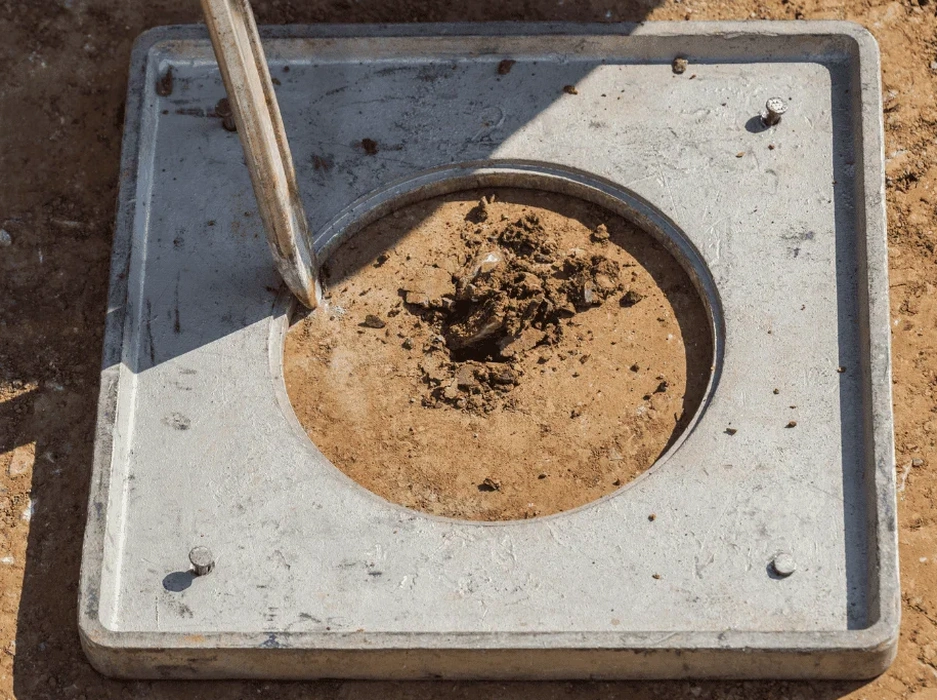
We recently reviewed the ground investigation data for a proposed three-storey residential block near the Menai Strait, just off Ffordd Gwynedd. The borehole logs showed a clean, uniform fine sand layer at 4.5 metres depth, sitting right on top of the groundwater table. Bangor’s glacial and fluvial history creates these exact conditions in pockets across the city. The developer initially questioned the need for a soil liquefaction analysis, arguing that North Wales isn’t seismic enough to worry about it. That’s a common misunderstanding we encounter locally. Even moderate magnitude events in the Irish Sea — the 1984 Llŷn Peninsula earthquake registered 5.4 on the Richter scale — can generate cyclic stresses that turn saturated, loose granular soils into a liquid-like mass. Our accredited laboratory ran cyclic triaxial tests on undisturbed Shelby tube samples to determine the cyclic resistance ratio, cross-referenced with the site-specific groundwater monitoring data we had been collecting over the preceding six weeks. The analysis confirmed a moderate liquefaction susceptibility, which meant we had to design Improvement before the piling contractor could mobilise. This kind of upfront assessment saves enormous cost and programme delays later on.
Liquefaction doesn't require a strong earthquake — it requires the right soil, the right water table, and enough shaking to trigger excess pore pressure. In Bangor’s coastal deposits, those three conditions align more often than developers expect.
Standards that apply
BS 5930:2015+A1:2020 – Code of practice for ground investigations, BS EN 1998-1:2004 (Eurocode 8 Part 1) – General rules, seismic actions and rules for buildings, BS EN 1998-5:2004 (Eurocode 8 Part 5) – Foundations, retaining structures and geotechnical aspects, BS 1377-8:1990 – Shear strength tests (effective stress) including cyclic triaxial, BRE Special Digest 1 – Concrete in aggressive ground (sulfate assessment post-liquefaction)
Q&A
Does Bangor really need a soil liquefaction analysis given the low seismicity of the UK?
Yes, and the reason is the geology rather than the seismicity alone. The UK National Annex to Eurocode 8 assigns a reference peak ground acceleration of about 0.02g to 0.06g for a 475-year return period across North Wales. That's low, but saturated loose sands — like those found in the glacial outwash and tidal flat deposits around Bangor — can liquefy at very low cyclic stress ratios. The 1984 Llŷn Peninsula earthquake demonstrated that the region is seismically active enough to trigger excess pore pressure in susceptible soils. The assessment is mandatory for Importance Class 2 and above structures under UK building regulations, and many warranty providers now require it as standard for any site with a groundwater table within 5 metres of the surface and granular soils.
What is the typical cost for a soil liquefaction analysis on a Bangor site?
For a standard residential or commercial site in the Bangor area, a complete soil liquefaction analysis — including field investigation, piezometer monitoring, and cyclic triaxial laboratory testing — typically ranges from £1,880 to £3,500 depending on the number of boreholes, the depth to the water table, and the number of samples requiring cyclic testing. A simple screening-level assessment using existing SPT data costs less, while a full programme with multiple cyclic triaxial tests on undisturbed samples will be at the upper end. We provide a fixed-price proposal once we have reviewed the site geology and the proposed foundation layout.
What ground investigation data do you need to perform the analysis?
We need borehole logs with SPT N-values at 1.5-metre intervals through the full depth of granular deposits, groundwater monitoring data from standpipe piezometers over at least one tidal cycle, and laboratory classification tests (grading and Atterberg limits) on representative samples from each potentially liquefiable layer. If the project requires a detailed assessment, we will recover undisturbed Shelby tube or block samples from the critical layers for cyclic triaxial testing in our laboratory. We can also work with CPT cone resistance data if it is available, which provides a continuous profile and avoids some of the correction uncertainties associated with SPT correlations.
What happens if the analysis shows my site has a high liquefaction risk?
A high liquefaction risk does not stop the project — it changes the ground engineering strategy. Depending on the depth and thickness of the liquefiable layer, the structural loads, and the site access constraints, we evaluate several mitigation options. These can include vibrocompaction or stone columns to densify the granular soil, rigid inclusions that transfer loads below the liquefiable layer, or a ground-bearing raft foundation designed with a post-liquefaction settlement tolerance verified by numerical analysis. We work with the project's structural engineer to recommend the most cost-effective solution and provide the design parameters for the chosen Improvement technique.